|
After a particularly cold and snowy winter, I’ve been joining everyone else in celebrating the signs of thaw we’ve been having this week. The temperatures are starting to creep above freezing, the snow is melting, the clocks have changed, and the days are feeling noticeably longer. With the warmer weather and signs of life also comes the unfortunate side effect of spring allergies. While we all love the warmer weather, the impending puff of yellow dust will soon coat our cars and plug our noses. Now is the perfect time to start preparing to fight off your seasonal allergies with acupuncture. Chinese Medicine Perspective on Seasonal Allergies I often explain Chinese medicine diagnosis as trying to identify the weather pattern of a person’s body. Swelling and fluid retention is considered “damp,” redness and inflammation is “heat,” stiffness and poor circulation is often “cold,” etc. When we look at allergies, we look at wind. Wind is considered to be the pathogen that carries all other pathogens into the body. It typically presents with more superficial symptoms like itching, watery eyes, dizziness or lightheadedness, skin rash, and watery congestion. What does this all sound like? A good case of seasonal allergies. The treatment strategy for wind is to “release the exterior,” which I think of as being akin to opening the windows and letting in some fresh air. The objective is to create harmony between your internal and external environment. Starting with acupuncture before your allergies have really set in is the best way to stay ahead of it. We can use acupuncture points to both regulate the immune response and also to treat symptoms once they start. Local points can help clear sinuses and relieve headaches, but what I always think is most interesting are the distal points (points on your body away from the symptomatic problem) that address the “weather pattern” as a whole. Acupuncture Points Two of my favorite points for clearing wind and supporting your body through pollen season are Lung 7 (Lu 7) and Large Intestine 4 (LI 4). Lu 7 is found on the inside of the wrist about 2 fingerwidths from the base of the thumb. It is commonly used to treat a wide variety of respiratory issues such as cough, shortness of breath, chills, nasal congestion, and sore throat. It is said to “disperse wind, descend the qi, and regulate the water passages.” LI 4 is found on the top of the hand in the meaty part of the muscle between your thumb and pointer finger. The best way to find it on yourself is to press into the muscle until you find an area that feels tender or bruised. This point is most well known for treating headaches, but is also categorized as the “command point” of the face, meaning that it can be useful in treating anything going on in our face. I use it frequently for headaches, red and itchy eyes, recurring nose bleeds, congestion, and sore throat. It is said to “regulate the defensive qi, expel wind, and release the exterior.” On their own each of these points have obvious effects for treating allergy symptoms, but together they are even more powerful. Each acupuncture meridian has a point called the “luo point” which is where the meridian connects to its pair. Lu 7 and LI 4 are the luo points of their respective meridians, connecting the two channels to help move energy through or out of the body. Metal Element
In a previous post, I talked about the wood element. Lung and Large Intestine are the organ/meridian pair for the metal element. The metal element holds concepts of borders and boundaries, communication, and worth. It considers what we take in and what we let go of, refining our resources into what we can actually use. When we consider allergies to be a symptom of wind, stabilizing the relationship between interior and exterior allows that wind to move freely without trapping pathogens. Using this treatment strategy leading into allergy season can help us all breathe a little easier. If you’re excited to revel in the spring air, and want to bolster yourself up so the season doesn’t get the best of you, I’d love to see you in my office soon so I can support you while the world around us starts to bloom.
0 Comments
The Lunar New Year arrives each year between late January and mid-February, beginning with the first new moon of the lunar calendar. It is celebrated across many Asian cultures and is often referred to as Chinese New Year because it follows the Chinese zodiac cycle.
Each Lunar New Year carries two energetic influences:
This year, February 17th marks the beginning of the Year of the Yang Fire Horse. Understanding Yang Fire Horse Energy Yang is the outward, active expression of energy. Fire, by nature, is already expressive, warm, and dynamic. When Fire energy is balanced, we experience joy, inspiration, clarity, and a strong sense of connection with others. The Horse is traditionally associated with the Heart. It represents passion, independence, charisma, and forward movement. When we combine Yang Fire with the Horse, we get a year charged with:
When Fire Becomes Excessive When Fire energy becomes imbalanced, it can show up as:
A strong fire is not built all at once. It begins with small twigs, then larger branches, and only later can it sustain large logs. Fire is also communal — we gather around it, and each person takes a turn tending the flame. Allow others to support you. Let someone else stoke the fire when needed. But don’t sit back entirely and expect to stay warm without participating. This is a year to engage wholeheartedly — with awareness. Riding the Energy of the Year The Yang Fire Horse does not whisper — it gallops. The question is not whether there will be movement, but whether you will direct it or be carried by it. To stay balanced during this dynamic year, consider:
Happy Lunar New Year. I can’t wait to see what we create with it. One of the things I hear most often in my clinic is, “I just can’t sleep.” Whether it’s lying awake for hours, waking up at 3 a.m. with a busy mind, or feeling like your body never truly rests, insomnia can feel exhausting on every level.
In Traditional Chinese Medicine (TCM), sleep is seen as a natural rhythm between yin and yang. At night, yang activity is meant to quiet down so yin—our cooling, nourishing, restorative energy—can take over. When that balance is disturbed, the mind has a hard time settling and the body doesn’t fully recharge. The good news? There are small, gentle tools you can use at home to start supporting your nervous system and inviting deeper rest. Let’s look at a few. 1. Acupressure Point: Anmian (Peaceful Sleep Point) One of my favorite points for calming the mind is called Anmian, which means “peaceful sleep.” You’ll find it just behind the ear: if you feel for the soft spot between the bony bump behind your ear and the back of your neck, you’re in the right place. Try pressing or massaging this spot in little circles for a minute or two on each side before bed while taking slow belly breaths. Many people notice it helps ease a restless mind and prepares the body for sleep. 2. Supplement Spotlight: L-Theanine & Suan Zao Ren Tang Sometimes, the nervous system just needs a little extra help winding down.
If you’re curious about herbs, it’s best to talk with an acupuncturist or herbalist who can determine which formula truly matches your pattern. 3. Stretching to Relax the Nervous System Gentle movement before bed can be a powerful signal to the body that it’s time to slow down. I often suggest a few easy stretches that target areas where stress collects:
The key isn’t how “deep” the stretch is, but how mindfully you move and breathe. Think of it as a way of telling your body, “You’re safe. It’s okay to rest now.” 4. A TCM Lens on Insomnia From a TCM perspective, there are a few common patterns that lead to trouble sleeping:
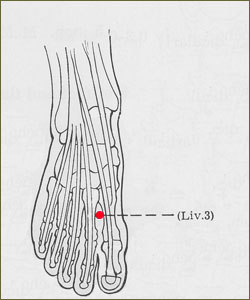
Each pattern is unique, which is why in the clinic we match the treatment to the root cause rather than just the symptom. Bringing It All Together Better sleep doesn’t happen overnight (pun intended), but small steps add up. Acupressure, supplements like l-theanine, time-honored formulas such as Suan Zao Ren Tang, and gentle stretching are all simple, supportive ways to calm your nervous system and give your body the message that it’s safe to rest. If sleep is something you struggle with often, know that you’re not alone—and that there are many ways to restore balance. Sometimes the path to better sleep is less about forcing it, and more about creating the right environment for rest to naturally arise. Spring may still feel like it's a ways off, but the Chinese calendar marks today as the first day of Spring. If you pay close attention, you can sense its beginnings. Maybe a bird lands on a tree branch that hasn't had any visitors all winter. Maybe patches of grass are starting to reveal themselves from under the snow. Maybe the air has a certain shift in how it wraps itself around you and you feel the beginnings of a bit of energy to go out and do the things that winter has kept you from. That new bit of energy is what Chinese medicine calls "wood." In Chinese Five Element theory, the world, and our bodies, can be observed through the interactions of five elements- Fire, Earth, Metal, Water, and Wood. Each of these elements correlates to seasons, organs, tissues, and bodily functions. These correlations allow us to understand the Chinese adage "As above, so below," meaning that what we see outside of us is reflected inside of us. Spring is ruled by wood. This is an element of growth, change, planning, and creation. Without room to properly express itself, wood can become angry and righteous. It is the power of a weed to grow through a cement sidewalk, or a dandelion to grow relentlessly in your yard. Wood asks us to move more, to reach out, to dream, and to act. In our bodies, wood rules our circulation and our tendons. It keeps us bending and stretching, and gets our blood moving out to our furthest reaches. The acupuncture point I always think of most when I consider the wood element is Liver 3. This point is found on the top of the foot in the space between your big toe and your second toe. It is used to improve circulation, reduce stagnation, and can be effective in treating body pain, headaches, dizziness, eye issues, anger and irritability, and helps to regulate the menstrual cycle. For a little spring self care, you can massage this area. You’ll know you’re in the right spot when it feels tender or slightly bruised with pressure. Use this time to start thinking about where in your life you could use a growth spurt. Think about the tight parts of your body that could use a little extra movement. We are just entering the time of year full of the most potential energy- how will you use it? |
Leah Rainer, L.AcExploring the science and art of Chinese Medicine. Archives
March 2026
Categories
All
|


RSS Feed